

Key Takeaways
AMC CEO Adam Aron demanded that Robinhood halt AMC Stock Tokens, saying the company never approved them.The clash spotlighted tokenized stocks and their liquidity pool.AMC’s legal review could test how far issuers can challenge offshore tokenized stock products.
Robinhood CEO Fires Back as AMC Demands Token Trading Stop
Robinhood, which reported record Q2 earnings, has entered into a feud with AMC.
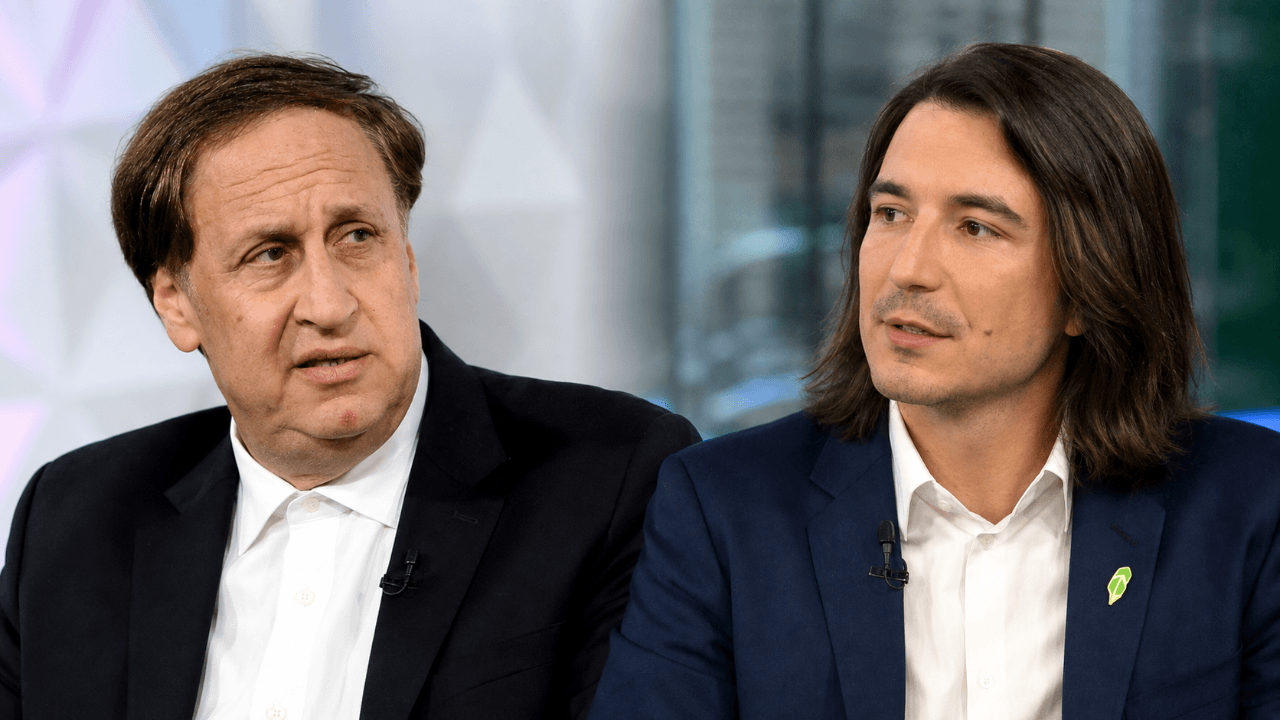
AMC Entertainment CEO Adam Aron has launched an unusually blunt attack on Robinhood over its AMC-linked Stock Token, calling the product “contemptible, outrageous, inexcusable” and demanding that trading cease.
In an X post, Aron said AMC neither authorized nor endorsed the token and questioned how a product referencing the company could trade outside the U.S. without registration under U.S. securities laws.
Robinhood CEO Vlad Tenev responded with four words: “What’s the concern?”
Aron’s argued that tokenized exposure could weaken companies’ control over capital raising, confuse investors about shareholder rights, and deepen distrust in financial markets.
“I hereby call on you and Robinhood to voluntarily CEASE the trading of AMC stock tokens,” Aron wrote, adding that AMC had instructed securities counsel to examine whether it could force Robinhood to stop.
Dan Gallagher, Robinhood’s Chief Legal Officer, retorted by telling Aron, “We know a little something about the U.S. securities laws. Send your lawyers and we’ll educate them,” with Tenev adding, “We stand behind Stock Tokens.”
Critics Clash Over Whether Aron Has a Case
The dispute quickly split observers over whether Aron is raising a genuine securities-law concern or attacking a structure that already sits outside traditional share ownership.
One commentator, Dr. Mickey, argued that Aron was overlooking the offshore structure and Regulation S framework, noting that the product is not offered to U.S. residents, while stressing that AMC itself did not issue the token.
Donnahue George took the opposite view, backing Aron and arguing that stock tokens without conventional shareholder rights should face tougher scrutiny.
Attorney Ariel Givner went further, saying the controversy exposes a basic problem with how many tokenized-stock products are marketed.
“Most tokenized ‘stocks’ are hopium and hot air,” Givner wrote on X. “They are not the shares. They are not redeemable for the actual equity.”
She argued that investors buying the AMC-linked product do not receive voting rights or a direct claim on the business. Instead, they receive economic exposure through an offshore structure using AMC’s ticker.
A more technical critique came from Shanaka Anslem Perera, who pointed out that AMC itself issued 342.7 million shares during the first half of 2026 through capital raises and debt-related transactions.
Perera argued that Robinhood’s product does not create additional AMC shares. Robinhood documents instead describe Stock Tokens as debt securities issued through a Jersey entity that track the economics of an underlying security without providing voting rights, dividend claims, or direct ownership.
That distinction now sits at the center of the fight. Aron sees the token as a threat to investor rights and corporate control. Critics of his position argue that synthetic exposure to stocks is hardly new. The difference is that Robinhood has made that exposure portable, programmable, and tradable around the clock onchain.
Robinhood Chain Turns the Feud Into a Crypto Trade
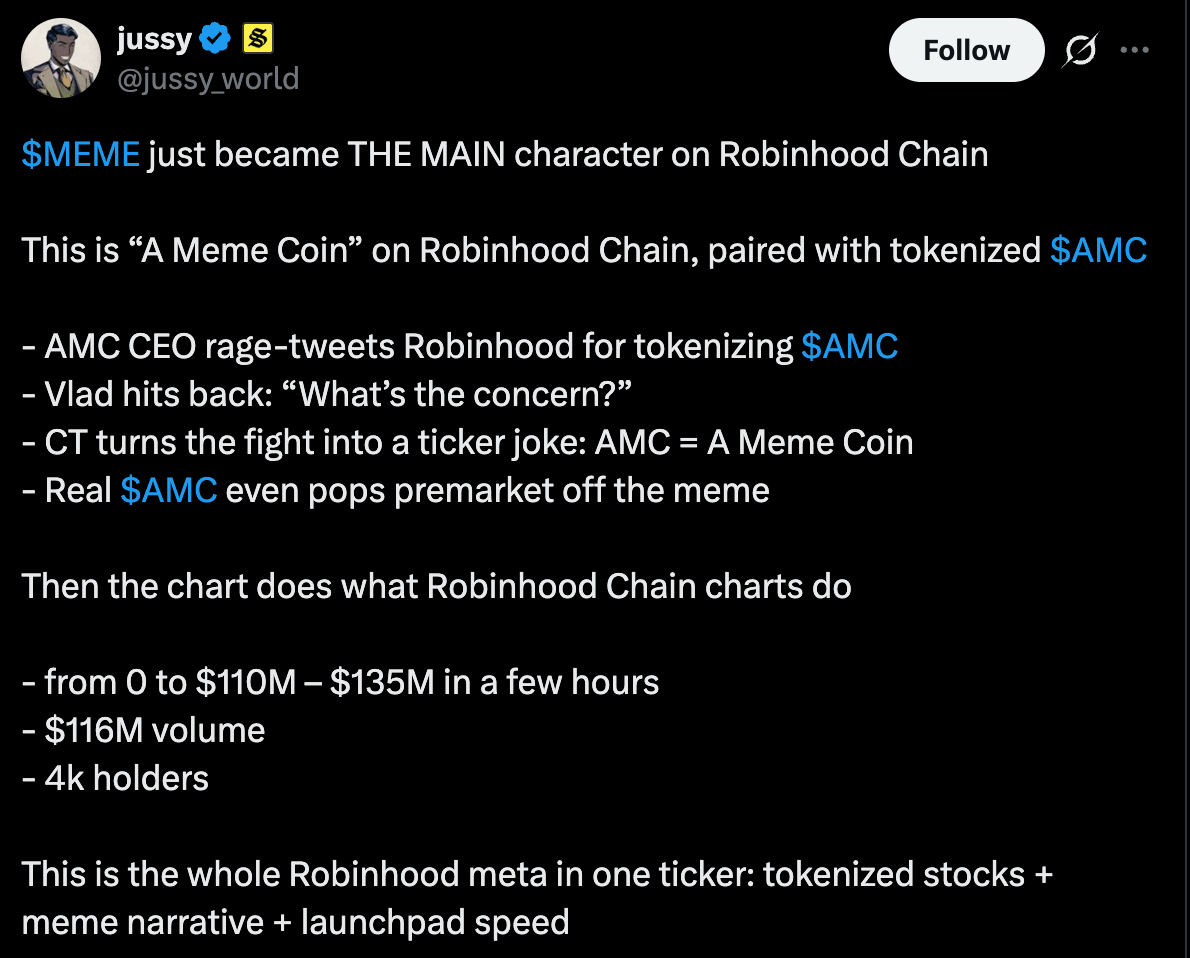
According to Jussy World, a meme with ticker AMC (A Meme Coin) launched on Robinhood Chain in response to the public feud exploded, rising to a market cap of $135 million along with $116 million in trading volume. The chain has attracted serious volume, even beating Ethereum and Hyperliquid in app revenue.
Meanwhile, AMC shares jumped in premarket trading after Aron’s posts, rising to roughly $3.07 from Thursday’s $2.54 close.
That timing highlights the larger issue confronting both Wall Street and crypto: tokenized price exposure can now trade around the clock, even when equity markets are closed.
For Aron, that is the problem. For Robinhood, it may be the product.

Comments are closed.