


What started out as a small exploit of the Fetch.ai’s Ethereum platform evolved into a larger exploit involving two separate projects.
The exploit occurred due to a weak security check in the Artificial Superintelligence Alliance [FET] token converter. Specifically, the FET system accepted a single “approval” without verifying if those approved tokens were actually locked or burned.
After obtaining the private key behind that signature, the attacker created their own approval and withdrew the bridge’s entire FET balance in one transaction. The attacker extracted 8.72 million FET worth about $1.54 million.
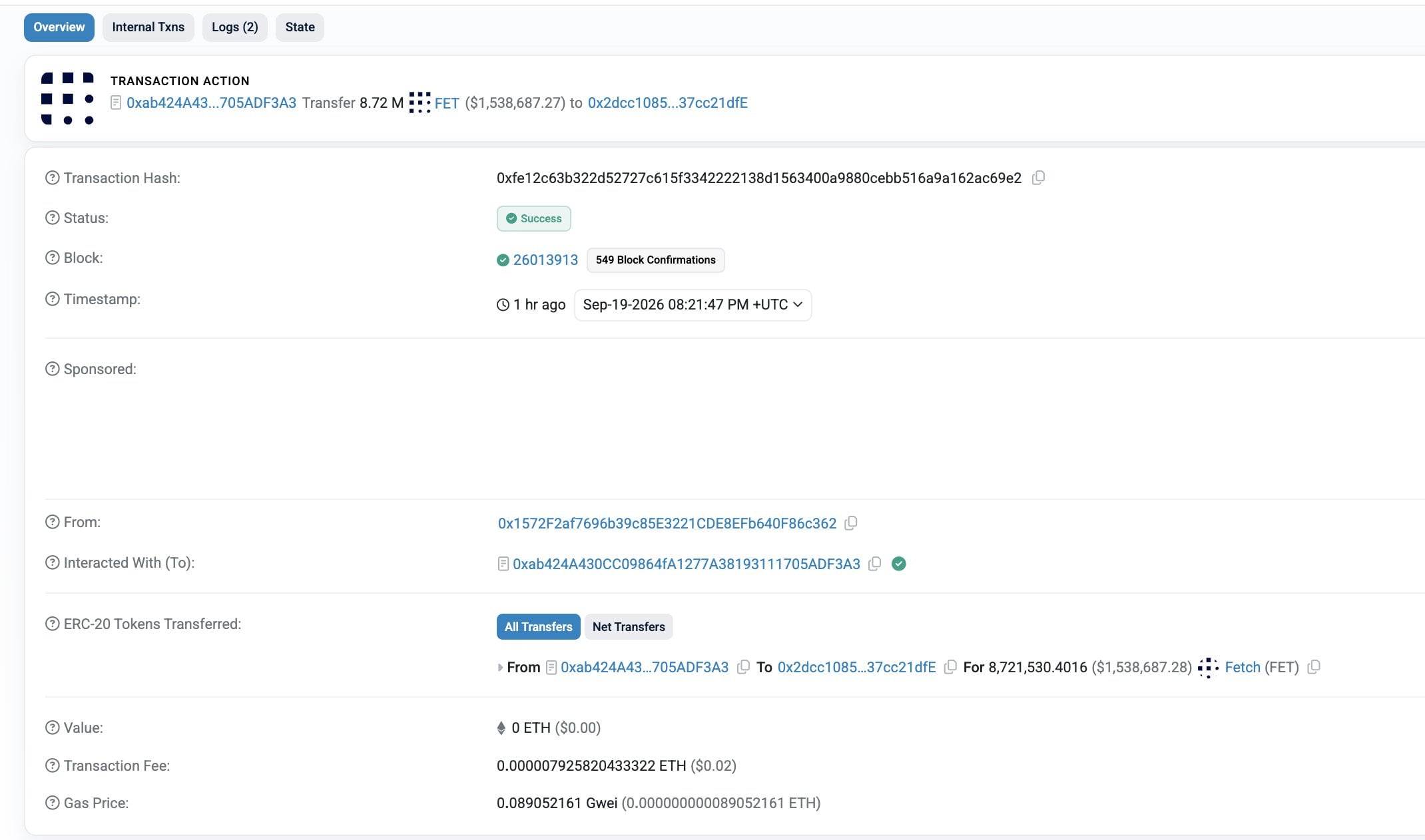
Later, the same wallet cluster would receive an additional 408.5 million newly minted NuNet [NTX]. Those tokens were worth roughly $463,000. The shared destination links both incidents to one operator.
The rapid asset movement suggests an effort to consolidate the proceeds quickly. Collectively, these attacks resulted in losses totaling around $2 million.
As such, these attacks highlight issues regarding contract security, unauthorized token issuances, and potential sell pressure affecting both ecosystems.
NTX takes the bigger hit
Price data has shown how the exploitation impacted market pressure on each token. The price of NTX fell from approximately $0.00130000 to $0.00005559. This was a 95.7% drop in value over the course of 408.5 million unauthorized tokens entering circulation.
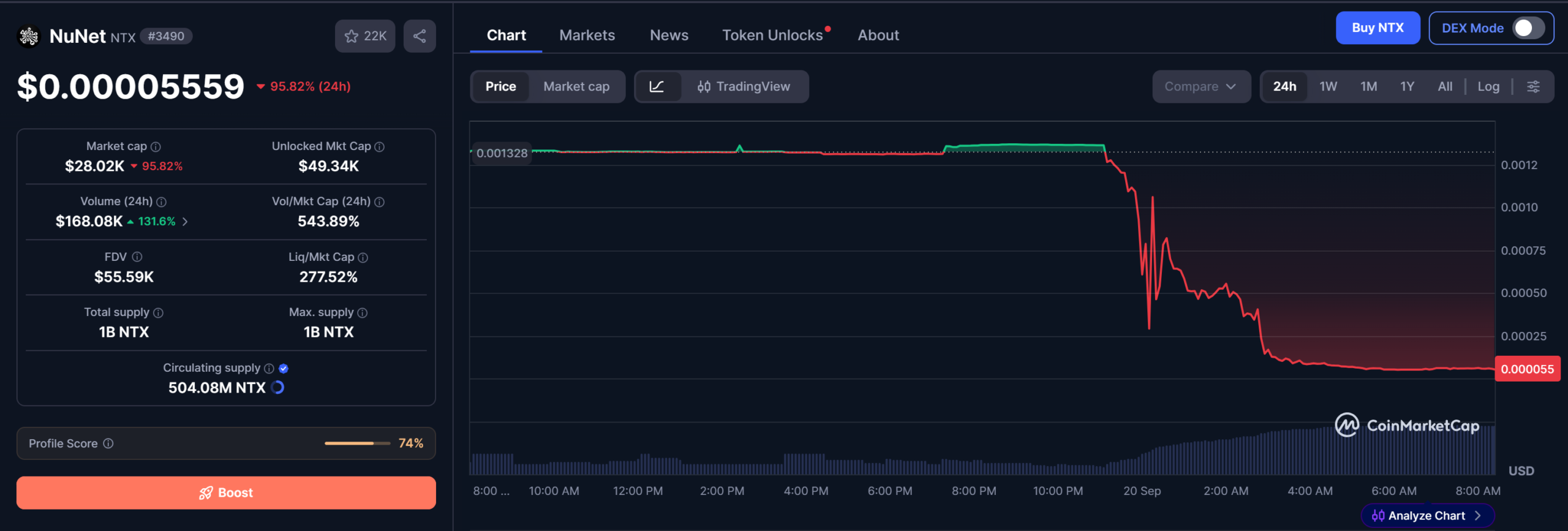
Trading volume rose 131.6% to $168,080, yet the surge failed to support a recovery. This was indicative of heavy sales as well as low demand and thus did not assist in recovering the price of the token. FET took a different route with respect to pricing.
Before the exploitation of the protocol, FET increased in value from $0.1490 to $0.1889 and experienced a gain of nearly 27% over a three-day period.
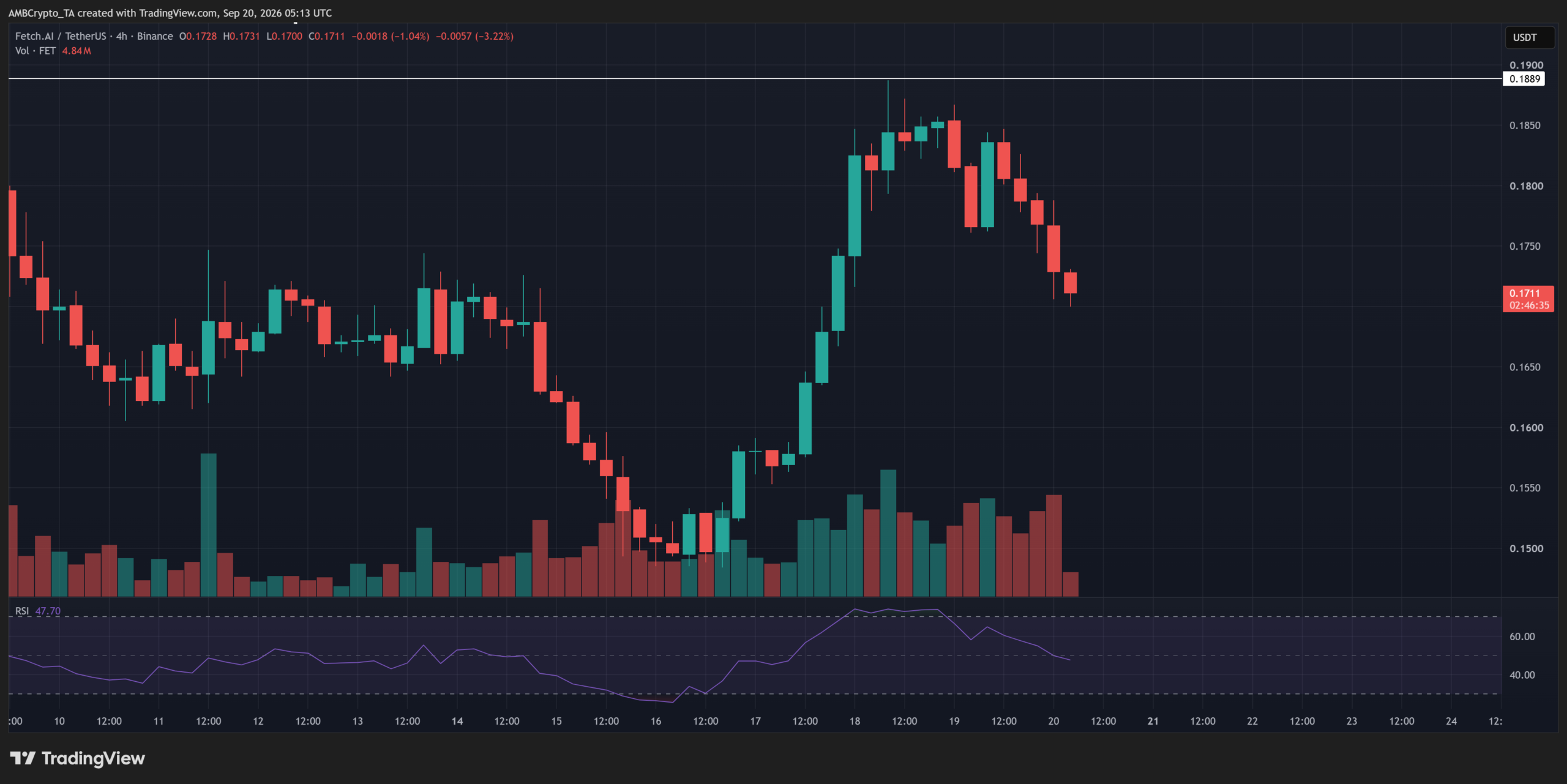
The attack pushed FET down to about $0.1711, a roughly 9% decline from its peak.
Since the hacker merely transferred existing FET instead of generating additional FET, there was relatively little dilution of the existing supply of FET, which enabled FET to absorb the impact of the hack.

Comments are closed.